That musty smell when you open the basement door is usually the first clue. Mold needs three things: moisture, something to feed on (wood, drywall, cardboard, dust) and mild temperatures. Basements have all three, and in South Bend's humid summers and wet springs, moisture is rarely in short supply.
The lasting fix is not just cleaning what you can see. It is controlling the moisture that lets mold grow in the first place. We connect South Bend homeowners with an independent local waterproofing contractor who can find the moisture source and recommend dehumidification, waterproofing or both. Call (317) 798-0634 for a free quote.
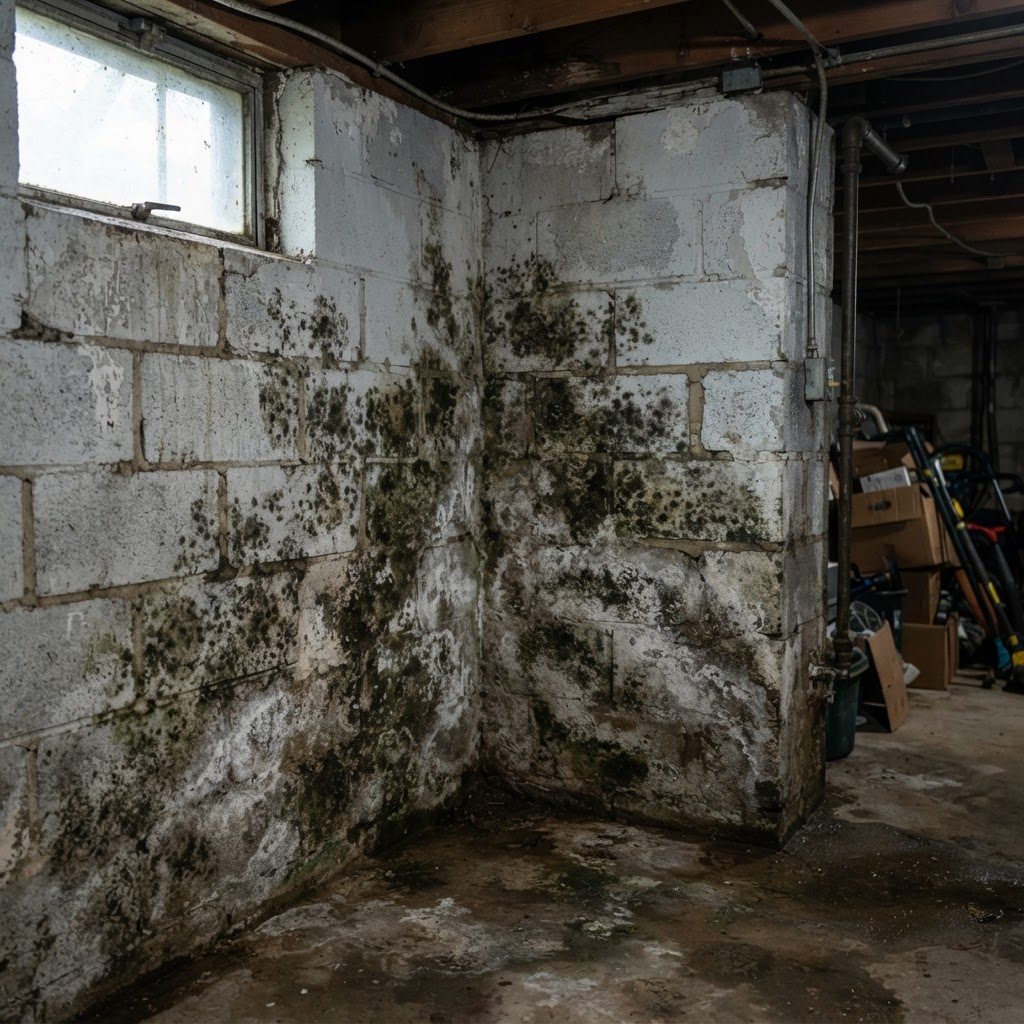
Signs of a Moisture or Mold Problem
- Musty, earthy smell
- Fuzzy or spotty growth on walls, joists, drywall or stored items
- Peeling paint or bubbling on walls
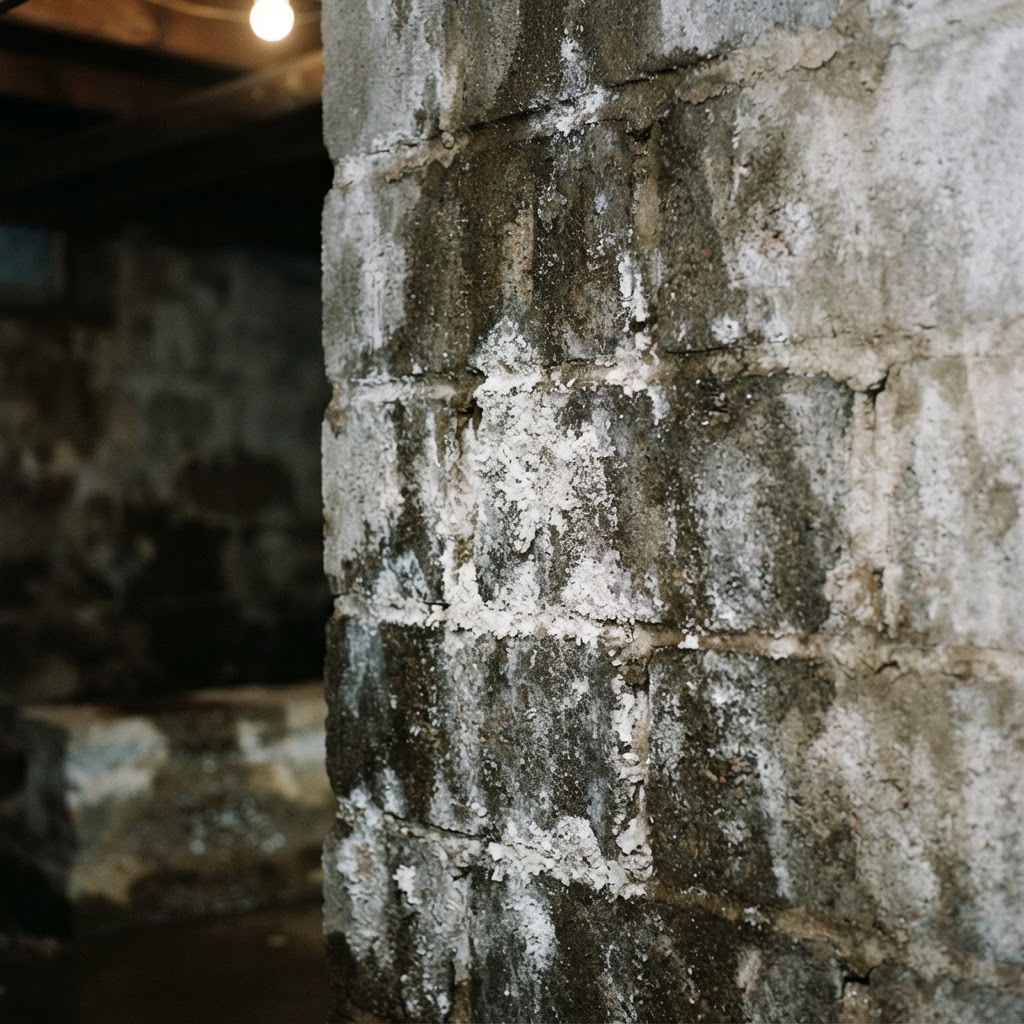
- White, chalky deposits on block or concrete (efflorescence), a sign water is moving through the wall
- Condensation on pipes, windows or the floor in summer
- Rusty nails, warped paneling or damp carpet
- Allergies or stuffiness that get worse in the basement
Efflorescence is not mold, but it tells you water is passing through the masonry.
Where Basement Moisture Comes From
- Liquid water leaking through cracks, the cove joint (where wall meets floor), window wells or the floor. See wet basement and leak repair.
- Groundwater vapor moving through concrete, especially in areas with a high water table.
- Humid outdoor air coming in through windows, doors and gaps in summer and condensing on cool basement surfaces.
- Inside sources such as dryers vented poorly, showers without fans, aquariums and laundry hung to dry.
- Open sump pits releasing moisture into the air. A sealed lid helps.
Why South Bend Basements Get Musty
- High groundwater in parts of St. Joseph County, especially near the river and low-lying areas, keeps foundation walls damp.
- Humid summers bring lots of moisture in from outside.
- Older homes with block or stone foundations and no exterior waterproofing let more moisture through.
- Lake-effect snow and spring thaws saturate the soil.
Mold Cleanup Basics
Small patches on hard surfaces can often be cleaned by a homeowner using appropriate protection and household cleaners; the EPA's guidance on mold cleanup is a good reference. Larger areas, mold in drywall or insulation, HVAC involvement, or anyone in the house with health concerns are reasons to call a mold remediation professional. Porous materials like drywall, carpet and cardboard with mold growth are often removed rather than cleaned.
Important: cleaning without fixing the moisture means the mold usually returns.
Dehumidifiers: What Works
Portable dehumidifiers
Store-bought units can help in small basements. Downsides: small water buckets, noise, and many are not built for cool basement temperatures or large spaces.
Whole-basement (whole-home) dehumidifiers
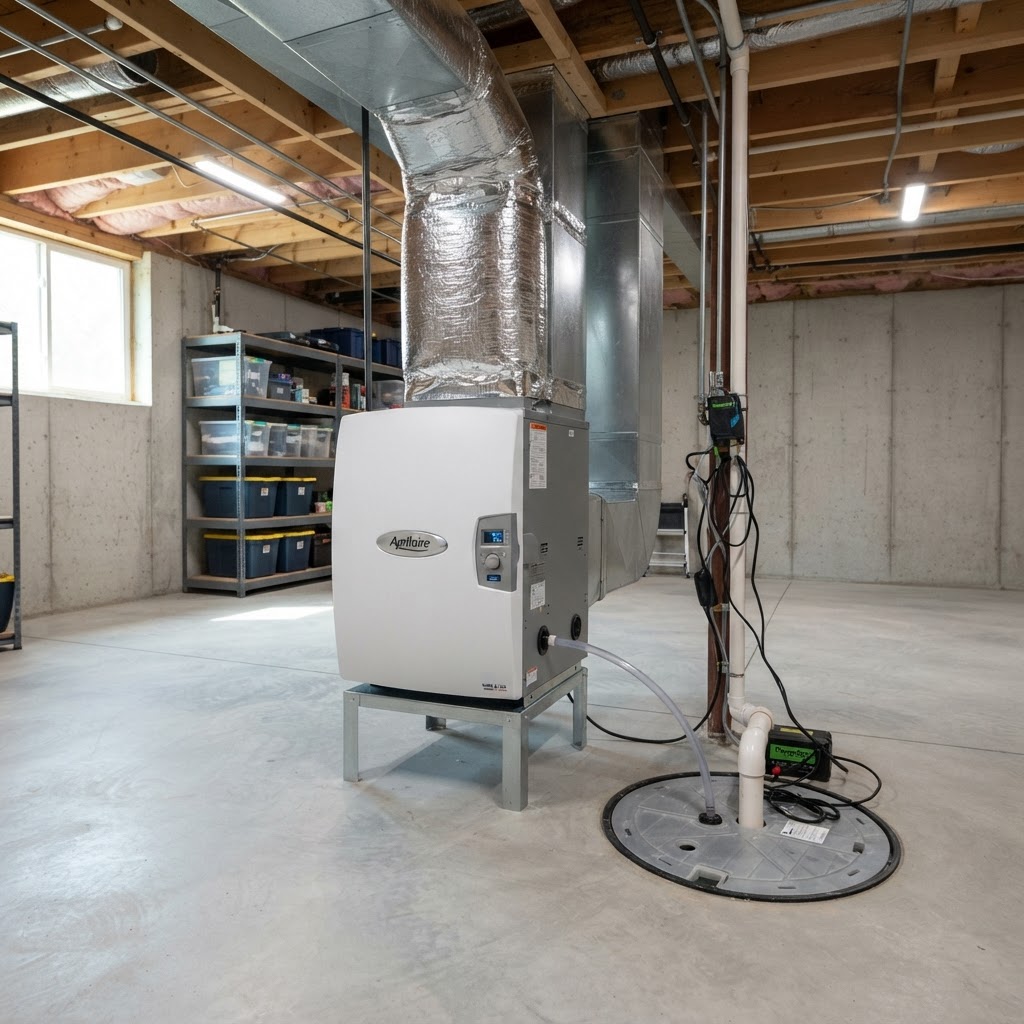
Larger, more efficient units designed for basements and crawl spaces. Features to look for:
- Rated for cooler temperatures
- Continuous drain to the sump pit or a floor drain, so there is no bucket
- Built-in humidistat
- Option to duct to multiple areas
- Filters you can easily change
Target humidity
Many guidelines suggest keeping indoor relative humidity below about 60%, and ideally lower in summer, to discourage mold. A cheap hygrometer lets you check.
Dehumidify, Waterproof, or Both?
| Situation | Likely approach |
|---|---|
| Musty smell, no visible water | Dehumidifier plus air sealing |
| Damp walls, efflorescence | Address grading and gutters; consider waterproofing; dehumidifier |
| Water on floor after storms | Waterproofing (drain tile, sump); dehumidifier as backup |
| Mold on finished walls | Remediation; find and fix source; dehumidifier |
A dehumidifier controls humidity, but it will not stop liquid water coming through a crack or floor joint. See basement waterproofing for drainage systems.
Other Helpful Steps
- Extend downspouts and fix grading
- Seal the sump pit lid
- Insulate cold water pipes to stop condensation
- Keep stored items off the floor in plastic bins, not cardboard
- Use bathroom and laundry fans that vent outside
- Keep basement windows closed on humid summer days
- Consider vapor barriers or wall systems when finishing a basement
Costs
A portable dehumidifier is a modest purchase. A professionally installed whole-basement dehumidifier is a bigger investment, and costs depend on unit size, drain setup, ducting and electrical needs. Mold remediation pricing depends on the size and location of the affected area. Treat any figures you see online as general typical ranges; costs vary, so get a free quote by calling (317) 798-0634. Our basement waterproofing cost guide covers related services.
Crawl Spaces
Crawl spaces get musty for the same reasons and can send damp air into the house. Encapsulation and dehumidification are common fixes. See crawl space waterproofing.
How It Works
Call (317) 798-0634 or send the form. We pass your request to an independent local contractor serving St. Joseph County, who will contact you to set up an inspection. There is no obligation.
Frequently Asked Questions
Tired of a musty basement?
Call (317) 798-0634 or send the short form, and a local contractor will be in touch about a free, no-obligation quote.