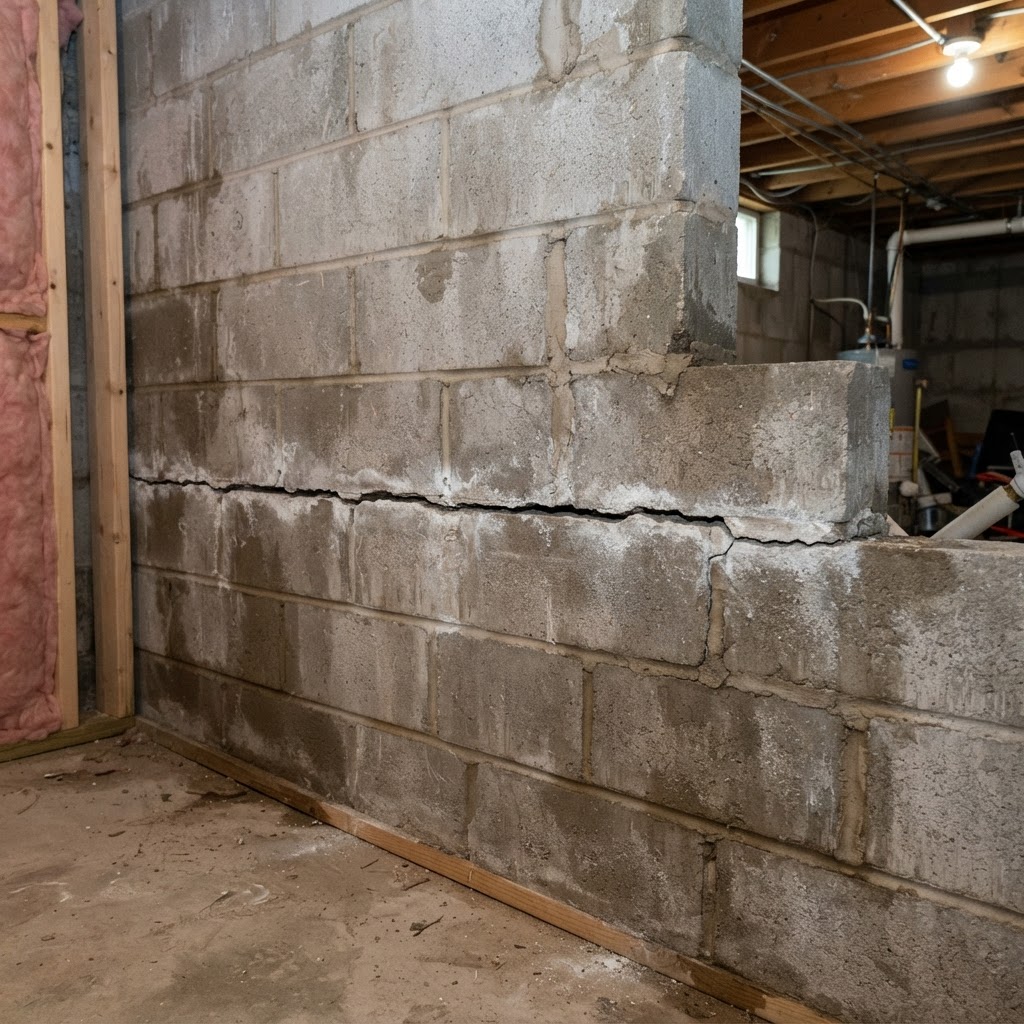
Concrete block was the go-to basement material for decades of South Bend homes, and block has a weakness: the mortar joints. When soil pressure builds against the outside, a block wall tends to crack horizontally and bow inward. Brick and fieldstone foundations under older homes have their own failure modes. Wall stabilization stops that movement before it becomes a much bigger repair.
Waterproofing South Bend connects you with an independent local contractor for wall stabilization in St. Joseph County. Call (317) 798-0634.
What Pushes Walls In
Saturated soil. When the water table rises or rain soaks the backfill, the soil's weight against the wall increases sharply. Clay pockets in parts of St. Joseph County hold water and swell.
Frost pressure. Wet soil near the top of the wall freezes and expands. South Bend's long, snowy winters give frost plenty of chances.
Surcharge loads. Driveways along the side of a house, parked vehicles, or a garage close to the basement add pressure.
Water-softened mortar. Years of seepage weaken mortar in block and stone walls.
Signs to Watch
- A horizontal crack along a block wall, often a few courses down from the top or near mid-height
- Stair-step cracks at the corners
- A wall leaning inward at the top, or bulging at the crack
- Block shifting inward at the top course (sheer movement)
- Loose or missing mortar in stone or brick walls
- Basement windows or doors that stick or have new gaps
Track it. Hold a level or tight string against the wall and measure the bow, then date it and recheck every season. Photos help the contractor.
Stabilization Methods
Carbon fiber reinforcement. Woven carbon straps bonded with epoxy at regular spacing. Slim and quick, best for walls with modest movement. They hold the wall where it is.
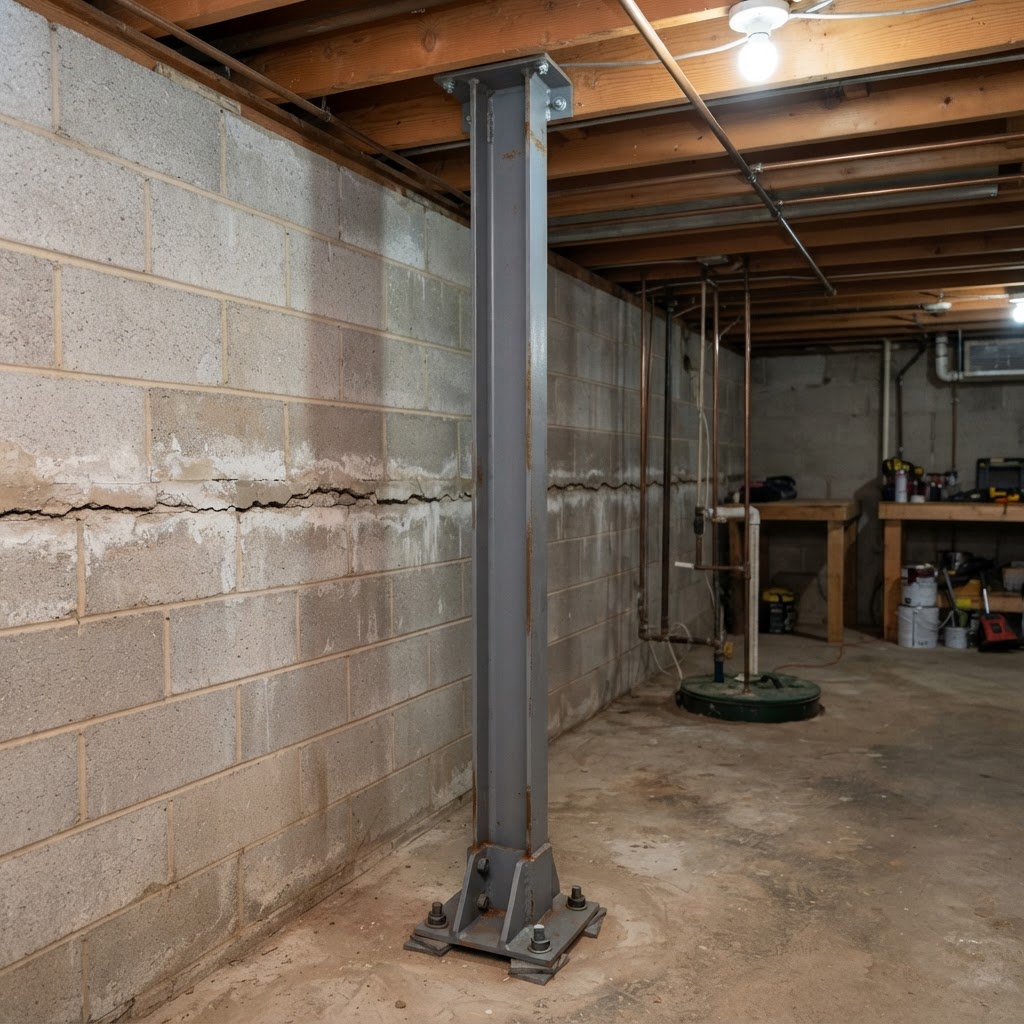
Steel I-beam braces. Vertical beams fastened at the floor and to the floor framing above. Strong and versatile, and some systems allow adjustment over time to gradually reduce the bow. They take a few inches of floor space.
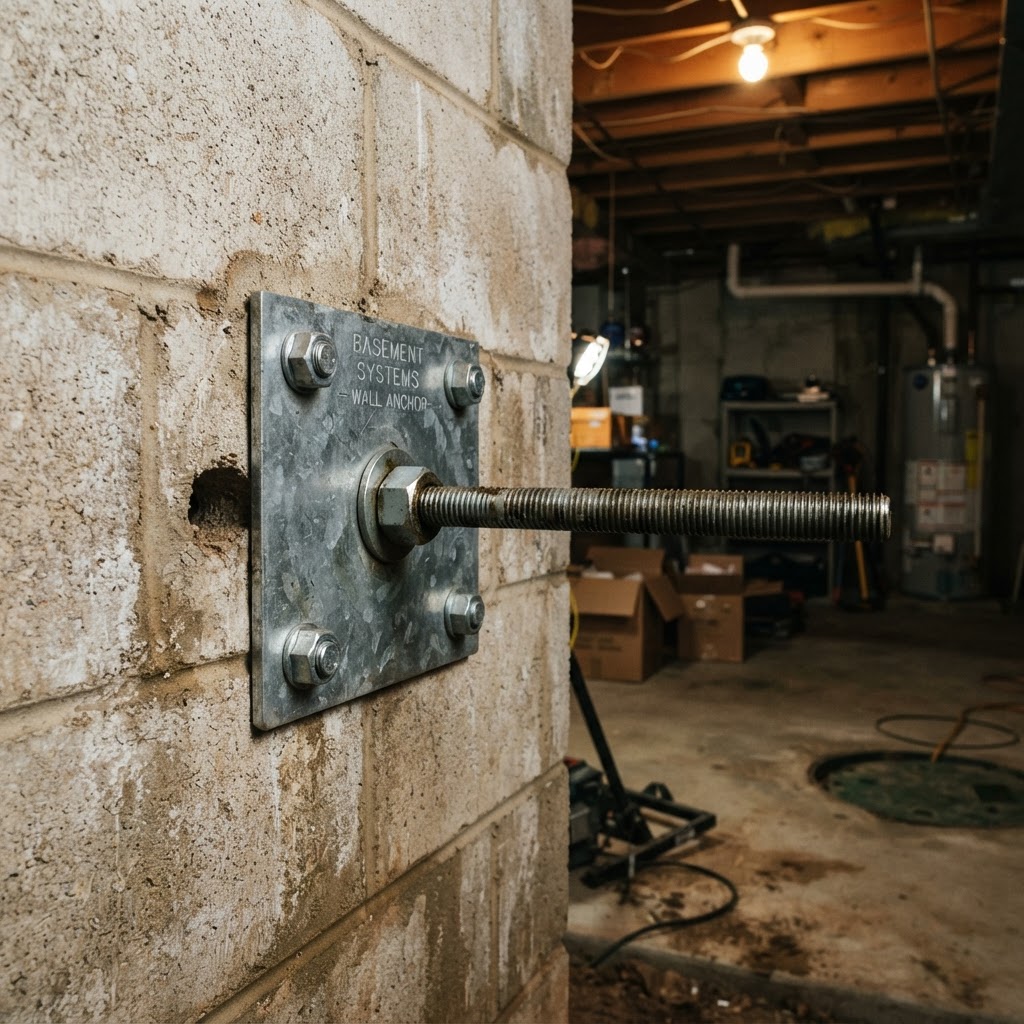
Wall anchors. Steel rods run from interior wall plates through the soil to anchors in the yard. Periodic tightening can pull walls back toward plumb. They need clear yard space; driveways, neighboring houses and buried utilities on narrow city lots may limit where they can go.
Excavate, straighten or rebuild. For walls with severe movement, sheared block, or crumbling stone, the soil is removed, the wall is straightened or rebuilt (often with reinforced, grouted block), waterproofed and backfilled with stone. It's the biggest job but solves the problem completely. See exterior excavation.
Stone and Brick Foundations
Fieldstone and brick walls in older neighborhoods rarely bow like block; they bulge, lose mortar and shed stones. Repointing, partial rebuilding, or interior reinforcement systems designed for masonry are typical. A contractor comfortable with historic foundations is worth seeking out.
Don't Skip the Water Side
Bracing a wall without reducing soil pressure leaves the cause in place. Good plans include drainage: an interior perimeter drain and sump, downspout extensions and regrading. If the wall is excavated, an exterior membrane and footing drain go in at the same time.
Engineers and Disclosure
For significant movement, a structural engineer's evaluation gives you an independent opinion and documentation buyers and lenders trust. Keep all repair paperwork for future sale.
What It Costs
As typical planning estimates, each carbon fiber strap usually costs in the hundreds, steel braces and wall anchors anywhere from several hundred to roughly $1,500 apiece, and wall excavation or rebuilding commonly reaches five figures. Not quotes. See waterproofing costs.
Permits
Structural foundation work commonly requires a permit through the City of South Bend or St. Joseph County. Ask who pulls it.
What Bowing Wall Repair Costs
Wall repair cost depends on the method (carbon fiber straps, steel braces, wall anchors or excavation and rebuild), the length of wall affected, how far it has moved, access for anchors in the yard, and whether finished walls must be opened. Straps and braces for one wall are a smaller project than anchoring several walls or excavating. In South Bend, heavy, wet soils are a common driver. Costs vary from house to house; treat any figure you see online as a general typical range and call (317) 798-0634 for a free quote.
See all ranges on our basement waterproofing cost guide.
Frequently Asked Questions
Worried about a bowing wall?
Call (317) 798-0634 or request an inspection.